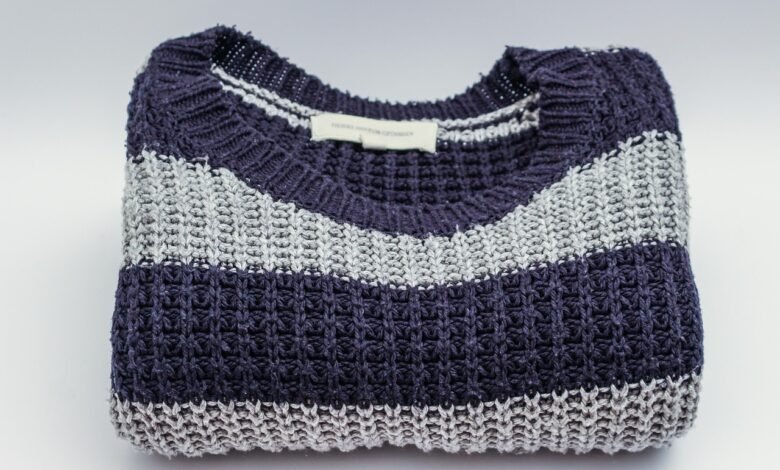
Your wool sweater did not shrink because its fibers got shorter like cotton, it felted because tiny scales along each fiber caught and locked. Scale sharpness, fiber fineness and a smooth coating decide if heat, moisture and motion cause permanent shrinkage, and Harvard explains scales flare out and intertwine when agitated in warm soapy water.
If you wonder why do wool sweaters shrink and felt in the wash, fiber studies and laundering measurements give evidence for the ratchet mechanism, not anecdote. Fine merino felts differently than coarse wool, superwash resists locking but feels smoother, and a wash symbol does not equal a scale-blocking treatment, so trusting the wool cycle depends on coating, and the difference comes down to three details you can spot at the cuff — fiber fineness, scale coating, and wash agitation — and one of them isn’t on the label.
Why do wool sweaters shrink and felt in the wash instead of just shrinking like cotton?
Wool changes size in two different ways, and mixing them up leads to the wrong fix.
Relaxation shrinkage happens when tension from knitting releases in water and yarns settle. Fibers are not shorter, they just rearrange. Felting shrinkage is different, fibers move past each other and lock so fabric becomes denser and smaller.
The dimensional changes after home laundering method defines negative change as shrinkage and positive as growth. It is the reference for measuring length and width after home wash procedures commonly used.
Relaxation can sometimes be eased back with careful blocking because fibers are still free. Felting resists that because scale edges have caught in the gaps of neighboring fibers, which may lead to irreversible interlocking.
Harvard Science in the News notes wool fibers are covered in little shingles that, when agitated by warm soapy water, scales flare out and intertwine, compacting the wool. That compaction is felting, not simple shortening.
Lab practice for this follows measuring length and area changes before and after washing, calculated per AATCC 135. Length and area both shrink when scales lock because the knit loses openness.
This covers protein animal-hair felting, not cotton, linen or viscose swelling. For contrast, see our guide on why viscose shrinks even in cold water, which explains hydrogen bond breakage rather than scale ratchet.
Stage boxes showing process in 3 stages from start to finish
The scale structure that makes wool felt — directional friction effect
Felting versus relaxation hinges on scales. Wool scale structure felting explains why only animal hair does this.
Each wool fiber is covered in overlapping cuticle cells like shingles. Exposed edges face away from the root, so friction is higher in one direction than the other.
That difference is called the Directional Friction Effect. Because of it, wet fibers tend to migrate toward the root end when rubbed. The ratchet mechanism describes how scale edges then lock into inter-scale gaps of neighbors.
The frictional properties that cause shrinkage have been linked to this imbricated structure. One source describes directional frictional coefficient because fibres migrate in direction of root ends, usually referred to as imbricated scale structure but also discussed as ratchet theory.
Microscopy references note cuticle cells overlap to create a directional frictional coefficient and that scales moved by water have tendency to close and join together producing felting and shrinkage.
The same principle is summarized as exposed edges facing away from root resulting in more friction in one direction known as Directional Friction Effect which leads to felting. Finer fibers have more scales per length, so felt can feel denser.
At the inside cuff, look for raised fuzzy halo and loss of stitch definition — felted areas feel denser and less elastic than unfelted knit. That halo shows scales have lifted and interlocked, not just surface pilling.
Stage boxes showing process in 3 stages from start to finish
What actually happens in the washing machine — heat, moisture, agitation
Scale structure explains why washing conditions matter. Understanding wool sweater felting causes means looking at three drivers together.
Moisture swells the fiber and lifts scale edges. Heat increases molecular mobility and opens scales further. Mechanical agitation provides energy for fibers to migrate root-ward and lock.
If you ask why does wool shrink in washing machine, the answer is those three together, not heat alone. Temperature changes and higher spin speed increase friction, so even a short hot phase can start interlocking.
Harsh alkaline detergents alter pH and make fibers more susceptible. Wool prefers near-neutral pH, so heavy-duty detergents raise felting risk.
Harvard notes fibers are agitated by warm soapy water and friction of moving load they expand making scales flare out and snag. That expansion is why motion matters as much as temperature.
Wool research describes that when subjected to moisture, heat and mechanical action, scales lift and lock together irreversibly, causing permanent contraction. Once locked, they do not slide back.
Standard lab reporting uses dimensional changes after washing measured per AATCC 135 with length and area change calculation, which is why length and width both reduce in felted sweaters.
On Mumsnet Style & Beauty, a poster shared that a 40-degree 600rpm wool wash felted two Sea Salt wool jumpers despite using the wool cycle. As one poster described it, “felted two sea salt wool jumpers”.
In that thread, the solution that came up repeatedly was switching to a hand wash cycle at 20 degrees or hand washing in the sink then spinning separately in a spinner to reduce agitation. That works because warm water plus agitation causes scales to flare and intertwine leading to irreversible felting, as explained by Harvard Science in the News research on scale expansion.
Interactive calculator: adjust settings to estimate outcome
Superwash vs non-superwash wool — why one resists felting
Heat and agitation trigger depends on whether scales are present. That is where superwash vs non superwash wool difference matters.
Superwash treatment removes or smooths scales. Wool is typically treated with chlorine to etch scale edges, then a polymer resin coating similar to Hercosett is applied that smooths the surface and prevents scale interlocking.
Non-superwash retains natural scales. It feels more textured and rustic, with more loft and elasticity, but felting risk is higher if agitated warm.
Untreated wool has scales along fiber shaft cause felting because they rub together and snag or bind together when wet. Superwash aims to stop that binding.
Manufacturers describe superwash as yarns that have been treated with chlorine to remove scales that coat wool fiber and then given plastic coating so fibers glide without grabbing.
The process also changes look. Trade notes explain the superwashing process smooths tiny fibers giving sheen, easier to get brighter saturated colors, less careful about temperature and agitation because non-superwash may felt.
Trade-offs exist. Superwash is machine washable and may show smoother sheen and slightly less elastic memory. It may still show some relaxation shrinkage, but typically resists the ratchet felting that causes dense shrinkage. Superwash is still wool protein fiber, not synthetic.
How to tell if your wool sweater will felt before you wash it
Superwash difference explains label check. Before you put a sweater in the machine, read what you can see and feel.
Check content label for 100 percent wool versus wool blend. Wool blends may felt less if wool share is low, but scales from wool portion can still cause local matting.
Look for superwash wording on the label or hangtag. If it says superwash, machine washable wool, or Hercosett, scales have been treated. If it says hand wash only with no superwash mention, assume scales are intact.
Feel for halo and loft versus slick resin-coated feel. Non-superwash fine merino often has soft halo and springy loft. Superwash often feels smoother and slightly cooler, with less halo.
Look at stitch definition. Sharp, raised stitches suggest intact scales and loft. Slick, slightly shiny surface with flatter stitches can hint at resin coating.
Fiber diameter influences felting density observation. Finer fibers have more scales per length, so felt can appear denser and more compact than coarser wool under same wash stress.
Certifications help with trust, not felting prediction by themselves. The Responsible Wool Standard aims to recognize best practices ensuring wool from farms with progressive land management and sheep treated with Five Freedoms including non-mulesing. It signals animal welfare and traceability.
The Woolmark Certification Program includes Woolmark 100 percent pure new wool, Woolmark Blend 50-99.9 percent new wool, Wool Blend 30-49.9 percent, and tests products through independent laboratories to ensure specifications.
The Woolmark program is described as an industry benchmark for wool quality. It tests durability and performance, but does not automatically mean superwash treatment.
Try this before you buy: check inner neck label for superwash, Woolmark, and care symbols — if it says hand wash only with no superwash mention, assume scales are intact. That one check avoids most accidental felting.
On Mumsnet Style & Beauty, a poster shared they were not sure what felted means and whether hand wash only label can be ignored with wool cycle. As one poster described it, “not sure what felted means”.
Practitioners who handle wool regularly report that natural fibres have scales all going same direction, and if direction is disturbed scales tangle and cannot be untangled, so elasticity is lost. That matches why disturbing scale direction causes irreversible tangling, as explained by frictional properties of wool where fibres migrate root-ward due to imbricated scale structure, described in directional frictional coefficient research.
How to prevent wool felting without hand washing everything
Identification signals determine which prevention applies. How to prevent wool felting depends on reducing all three drivers at once.
Use cold water, minimal agitation, pH-neutral wool detergent, low spin around 400 rpm, turn inside out, and use a mesh bag. Cold reduces scale opening, low agitation reduces root-ward migration, neutral pH keeps fibers less swollen.
Care labels that say dry clean only or hand wash often reflect manufacturer limits for scale interlocking, not just cleaning method. They signal that scales are intact and agitation risk is high.
When machine wool cycle is acceptable, it is typically for superwash, low agitation, cold water. When hand wash is required, it is typically for non-superwash fine gauge where scales are fully present.
You can now buy wool clothing treated to minimize flaring and thus minimize shrinking even in presence of heat soap and agitation but still good idea to wash on more delicate cycle in colder temperatures. That trade-off shows treatment helps but does not remove need for gentle handling.
Heat temperature changes and agitation spin cycle can felt wool and mat together and shrink it, especially at 600 rpm or higher, so checking actual machine settings matters.
Before committing, check washer manual for actual wool cycle temp and spin — many wool 40 degree cycles still agitate at 600 rpm. A cycle labeled wool may still provide enough moisture and motion to felt non-superwash.
Why gentle wool cycle still felted my sweater
Wool cycle does not equal safe for all wool. It still provides moisture and some agitation, which is enough for non-superwash with intact scales to ratchet.
Advice sounds reasonable because machine makers label a cycle wool, so users assume it prevents felting. The cycle reduces agitation compared to cottons, but does not remove the scale structure that causes felting.
On Mumsnet, a 40-degree 600rpm wool wash wool wash felted jumpers when first got machine. That matches practitioners noting heat plus spin accelerates permanent contraction even on delicate.
Care warning: high heat plus high spin causes scale edges to lock and compact fabric into dense felt that cannot be stretched back. Alkaline heavy-duty detergent raises pH and increases felting susceptibility, so wool-specific detergent matters.
Wardrobe decision tree for wool care labeling
Prevention becomes usable when turned into a decision path. This wardrobe decision tree for wool care labeling is a self-authored practical evaluation tool built from mechanisms above for in-store and laundry use, not a published industry standard.
Step 1: Check fiber content and certifications
Read inner neck label. Note wool percent, wool blend, and any Woolmark or RWS tag. The tracked from farm to final product claim in RWS signals chain of custody and animal welfare, not automatic felting resistance. Woolmark tests via independent laboratories ensure specifications for durability and quality, also not a felting guarantee.
Step 2: Check superwash wording
Look for superwash, machine washable wool, or Hercosett on label or product page. If present, scales have been etched and coated. If absent and label says hand wash, assume scales are intact and treat as non-superwash.
Step 3: Read care symbols per GINETEX
Check wash tub, temperature dots, and do-not-tumble symbols. The care labeling symbols system defines washing, bleaching, drying, ironing meanings. A hand wash tub means limit agitation, a machine tub with dots indicates max temperature, not felting safety.
Step 4: Choose wash method
Hand wash cold at approximately 20 degrees with wool detergent if non-superwash fine merino. Machine wool cold low spin in mesh bag inside out if superwash. Dry clean if label says so and you want lowest agitation risk. Turning inside out reduces surface friction.
Step 5: Dry flat and reshape
Do not tumble. Reshape to original measurements while damp, dry flat on towel away from direct heat. Blocking can recover some relaxation change, but not ratchet felting.
Making it work
Wool does not get shorter like cotton, it felts because directional scales catch and ratchet together. Check for superwash wording and actual care symbols before you trust a wool cycle, and choose cold low-agitation washing with pH-neutral detergent. That one label check decides whether a sweater stays soft or turns dense and small after one wash.
Frequently asked questions
Can a felted wool sweater be unfelted once scales have locked?
No, ratchet felting is largely irreversible because scale edges lock into gaps and cannot be untangled. Once wool is felted, texture changes and is impossible to undo.
Is superwash wool worth the higher price if I want machine washable work sweaters?
Superwash resists felting because scales are etched and coated, so you can typically use machine wool cold low spin in a mesh bag. It has smoother sheen and brighter dye, but slightly less loft, and cost-per-wear is estimated lower if you wear it approximately 3-4 times per week.
Does the Woolmark or Responsible Wool Standard label mean my sweater will not felt?
No. Woolmark tests via independent authorized laboratories for quality and durability. RWS ensures a progressive approach to managing land and animal welfare. Neither automatically means superwash treatment, so still check superwash wording and care symbols.
Why did my wool sweater felt in cold water on delicate even though I avoided heat?
Moisture plus agitation alone can lift scales and cause migration even in cold water, especially with non-superwash fine wool. Dimensional change can occur during home laundering procedures commonly used, not only hot washes, and higher spin or long cycles increase risk.